

Sri Lanka's President Gotabaya Rajapaksa was preparing Sunday to finally give up power after he fled from protesters who stormed his home, forcing him to announce his resignation.
The events on Saturday were the culmination of months of anti-government protests fuelled by an unprecedented economic crisis that bankrupted the South Asian island nation, and fury over the ruling Rajapaksa clan's corruption.
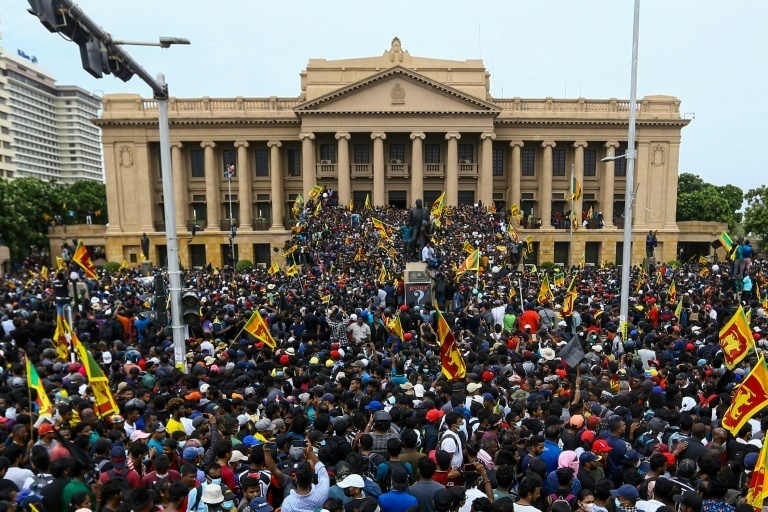
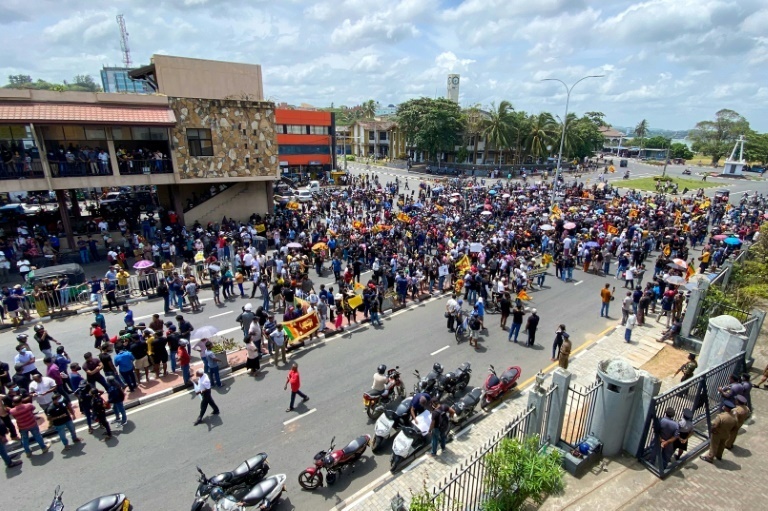
Hundreds of thousands of people had massed in the capital, Colombo, on Saturday to demand the government take responsibility for mismanaging the nation's finances, and for crippling food and fuel shortages.
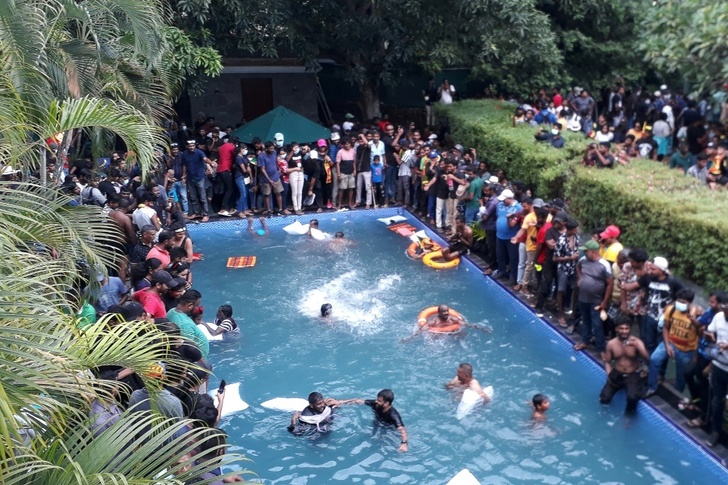
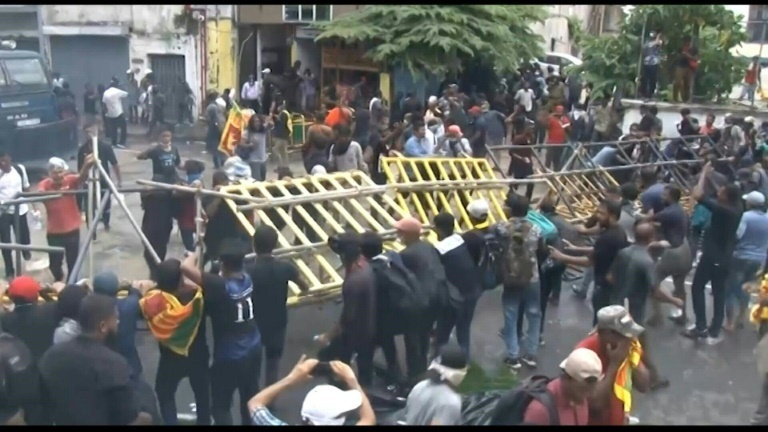
After storming the gates of the presidential palace, a throng of protesters walked through its rooms, with some among the boisterous crowd jumping into the compound's pool.
After fleeing, Rajapaksa boarded a naval craft at the Colombo port and was taken to the island's southern waters, where he said would finally bow to demands for him to step down.
"To ensure a peaceful transition, the president said he will step down on July 13," parliamentary speaker Mahinda Abeywardana said in a televised statement.
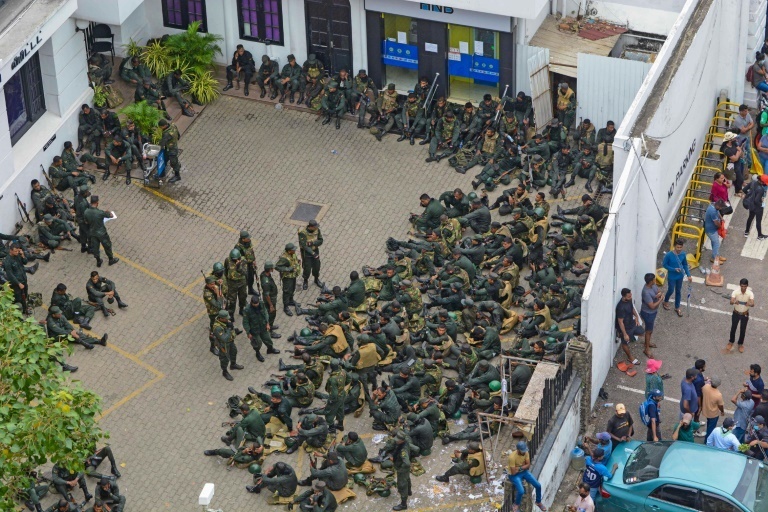
Rajapaksa had to be extracted from his residence by troops who fired into the air to keep the crowd outside at bay.
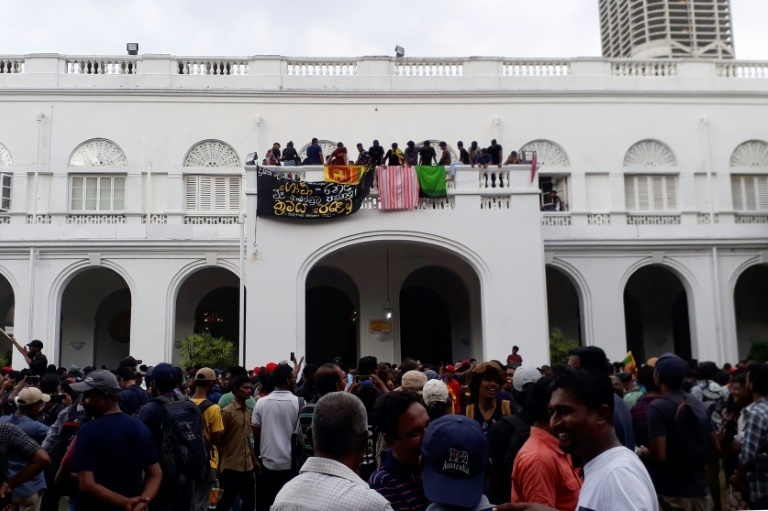
Soon after the protesters stormed the presidential palace, Rajapaksa's nearby seafront office also fell into the hands of protesters.
But that failed to placate protesters, who stormed the premier's private residence and set it alight after night fell.
Footage shared on social media showed a crowd cheering the blaze, which broke out shortly after a security detachment guarding Wickremesinghe attacked several journalists outside the home.
No casualties have been reported in the fire so far, and police said Wickremesinghe and his family were away at the time.
Rajapaksa's resignation announcement was set to trigger a power struggle.
The United States on Sunday urged Sri Lankan leaders to act quickly to seek long-term solutions.
-Default, desperation -
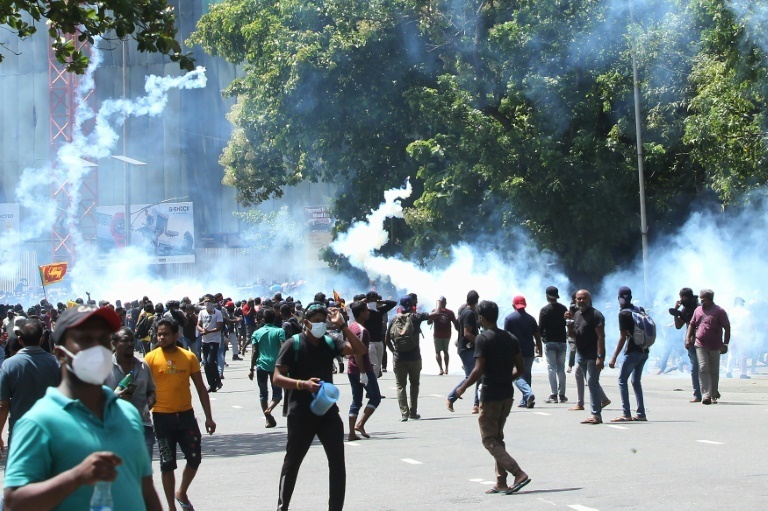
Security forces attempted to disperse the huge crowds that had mobbed Colombo's administrative district earlier in the day, with dozens injured in the resulting clashes.
A spokeswoman for Colombo's main hospital said three people were being treated for gunshot wounds, along with 36 others suffering breathing difficulties after being caught up in tear gas barrages.
The government has defaulted on its $51 billion external debt and is seeking an International Monetary Fund bailout.
Sri Lanka has nearly exhausted its already scarce supplies of petrol, and people unable to travel to the capital held protests in other cities across the island on Saturday.
Demonstrators had already maintained a months-long protest camp outside Rajapaksa's office demanding his resignation.
Nine people were killed and hundreds were wounded after the violence sparked reprisals against pro-government mobs and arson attacks on the homes of lawmakers.
- Cricket goes on -
The unrest comes at the tail end of Australia's ongoing cricket tour of Sri Lanka, with Pakistan's squad also on the island for their upcoming series.
Cricket officials said there were no plans to change their schedules, adding that the sport was unaffected by the political turmoil.
"There is no opposition to having the games. In fact, fans are supportive and we have no reason to reschedule."
aj/gle/kma/stu
© Agence France-Presse
Your content is great. However, if any of the content contained herein violates any rights of yours, including those of copyright, please contact us immediately by e-mail at media[@]kissrpr.com.
Source: Story.KISSPR.com