

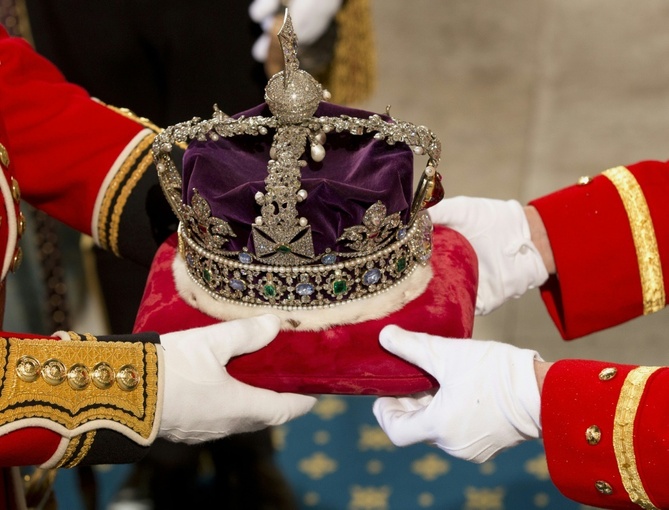
The coronation of King Charles III will showcase unusual relics and the world's finest jewels, which not only bedazzle but provide a physical and symbolic link with the ancient past.
Here are some items to look out for:
- Two crowns -
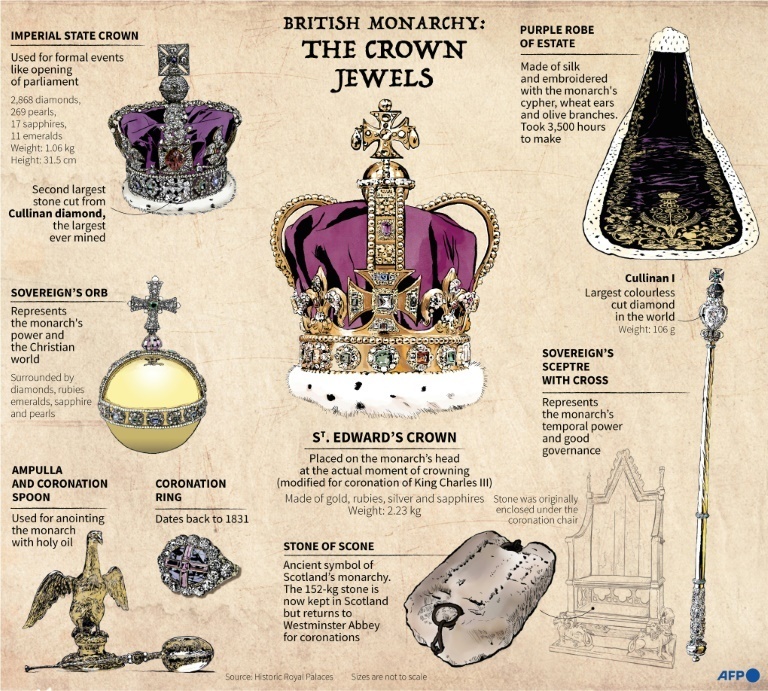
The St Edward's Crown -- the centrepiece of the Crown Jewels -- will be placed on Charles's head during the ceremony.
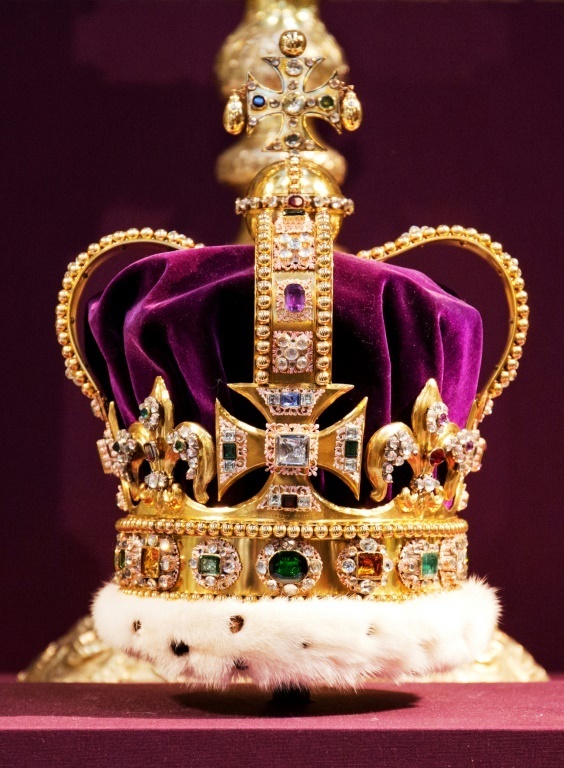
The crown was made for the coronation of the king's namesake, Charles II, in 1661.
The solid gold crown is set with semi-precious stones, including rubies, amethysts and sapphires.
It is trimmed with a purple velvet cap hemmed with an ermine band and features four crosses-pattee and four fleurs-de-lis.
"It's really a sacred symbol of the authority of monarchy," Eddie LeVian, chief executive at jewellery brand Le Vian, told AFP.
"Many people have accumulated wealth and try to buy the best of everything," he added.
"But those people can never get their hands on this quality of rubies and sapphires."
The crown, which has recently been resized to fit Charles's head, weighs more than two kilograms (nearly five pounds).
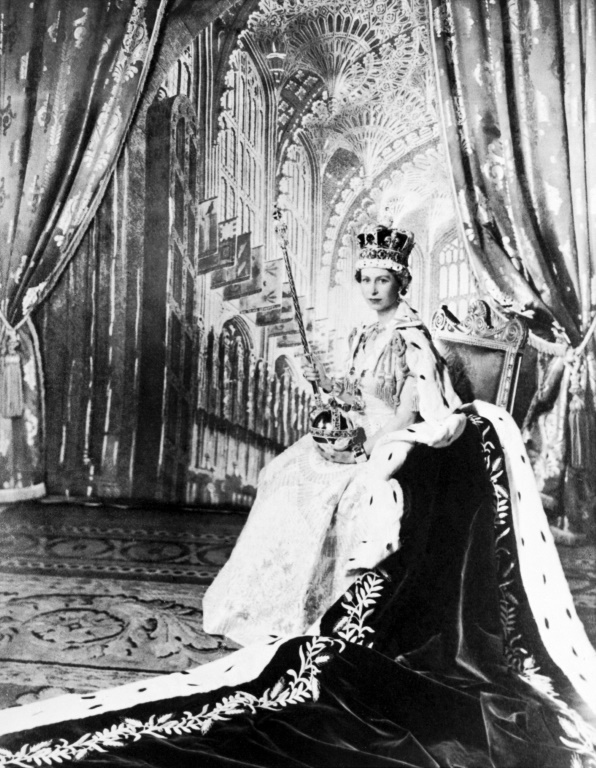
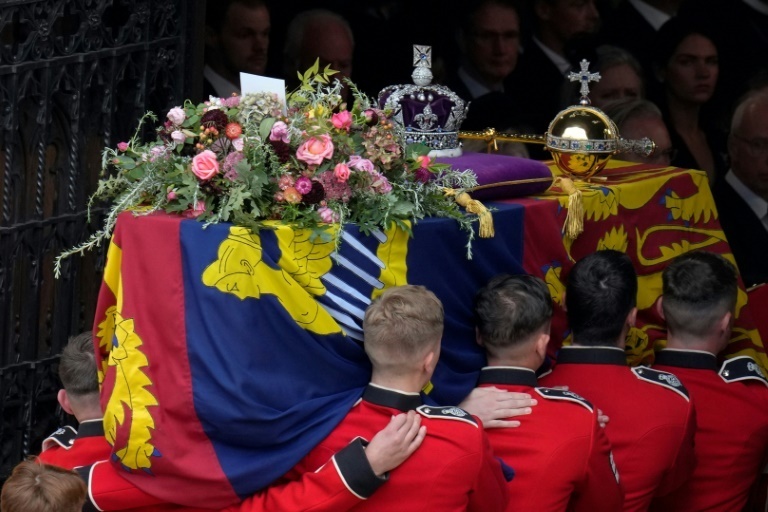
The king will also wear the Imperial State Crown, which was last seen at the state funeral of Queen Elizabeth II in September last year.
Created in 1937 for the coronation of King George VI, Elizabeth's father, it is also used at the State Opening of Parliament.
The crown includes the Cullinan II diamond, the second-largest stone cut from the Cullinan diamond, which the Royal Collection Trust says is the largest diamond ever discovered.
- Queen Mary's crown -
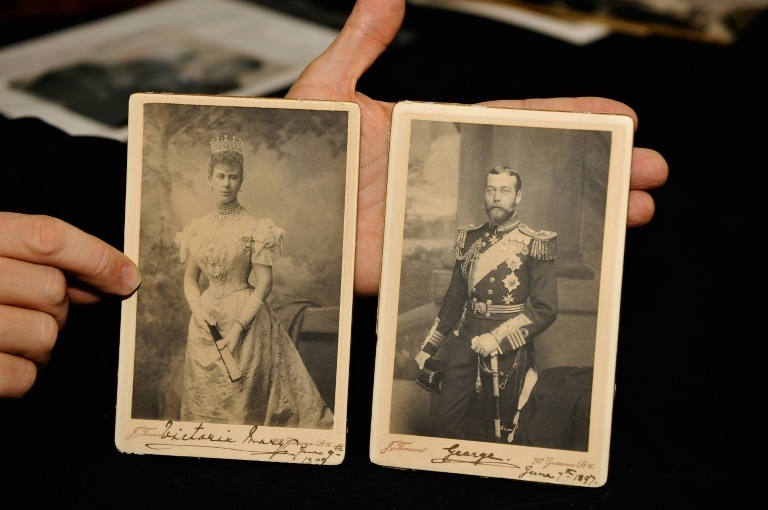
Queen Consort Camilla will wear Queen Mary's Crown, which is set with 2,200 diamonds.
Buckingham Palace said the move was made "in the interests of sustainability and efficiency".
Queen Mary, wife of King George V, had the crown made for her own coronation in 1911.
The palace said "minor" changes were made to "reflect Camilla's individual style" and "pay tribute" to the late Elizabeth II.
Several diamonds, the Cullinan III, IV and V, from Elizabeth II's personal collection, which she often wore as brooches, have been included.
The controversial Koh-i-Noor diamond, which was seized by the British East India Company in 1849, is no longer on the crown.
"She has wisely chosen to be a role model," said LeVian, whose ancestors guarded the Koh-i-Noor when it was owned by the shah of Persia in the 18th century.
- Two carriages -
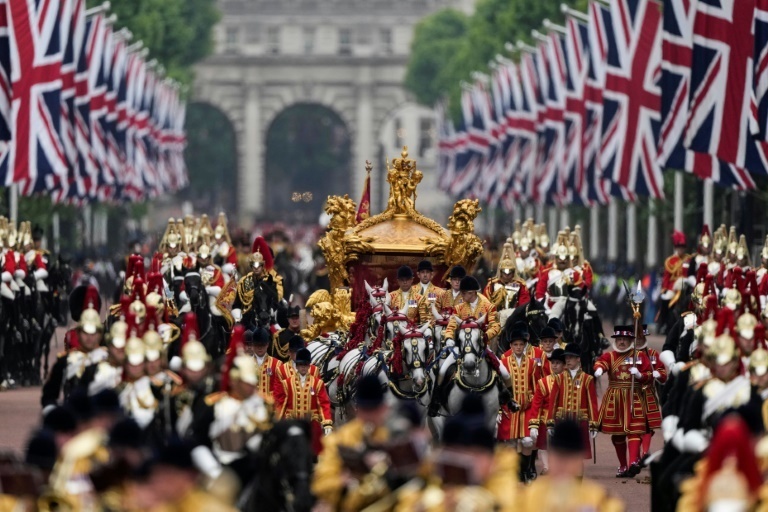
Charles and Camilla will take a shorter route from Buckingham Palace to Westminster Abbey than Elizabeth II did in 1953.
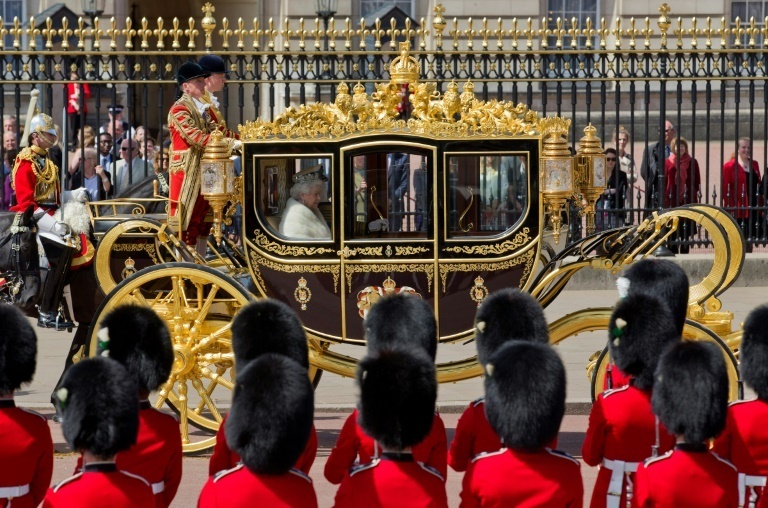
It has been used at every coronation since 1831.
At her coronation, Elizabeth II travelled back and forth in this coach and described the experience as "horrible" because of the lack of comfort.
It weighs four tonnes, is 3.6 metres high and seven metres long. It takes eight horses to draw it. Because of its weight and age, it only ever travels at walking pace.
"When you're following it, you can hear it creaking so it sounds like an old galleon going along," said Martin Oates, who looks after the carriages at the Royal Stables.
Built in Australia and first used by Queen Elizabeth II in 2014, it is the newest coach in the Royal Stables.
It has air conditioning and electric windows, and is prevented from swaying by six hydraulic stabilisers.
- Sceptres and orbs -
The largest colourless cut diamond in the world, the Cullinan I, reigns at the top.
Charles will also hold a golden orb decorated with diamonds, emeralds, rubies, sapphire and pearls and topped with amethyst and a cross.
- Cross of Wales -
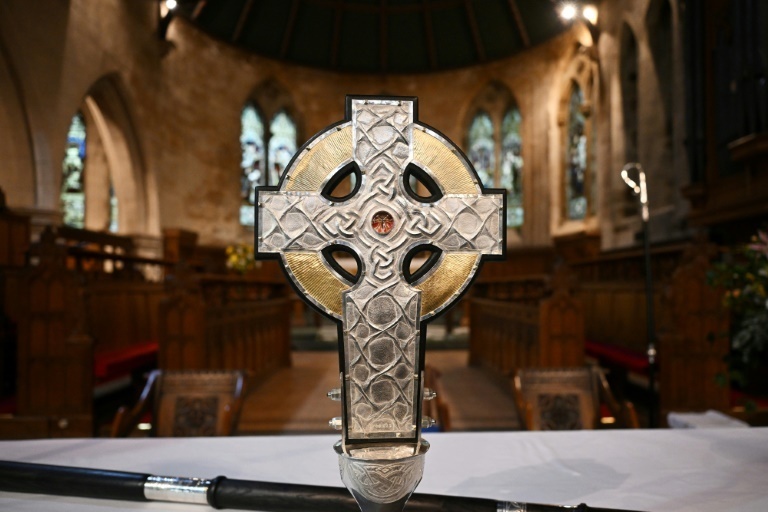
Pope Francis gave the two tiny fragments of the "True Cross" as a gift.
- The Coronation Chair -
It incorporates the so-called Stone of Destiny, the ancient symbol of Scotland's monarchy that Edward I seized in 1296 that has been brought back to London for the ceremony.
phz/giv/lb
© Agence France-Presse
Your content is great. However, if any of the content contained herein violates any rights of yours, including those of copyright, please contact us immediately by e-mail at media[@]kissrpr.com.
Source: Story.KISSPR.com