

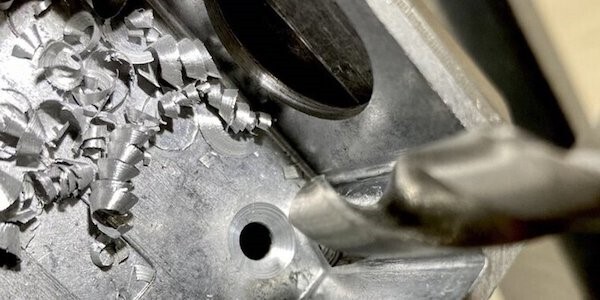
Selecting the right technique between countersinking and counterboring is critical in machining and metal fabrication. These methods of creating recessed holes for fasteners greatly impact the final product's installation process, appearance, and structural integrity. For manufacturing, design, or education professionals, understanding these methods' nuances is essential to achieve optimal results.
This comprehensive guide will explore the differences between a countersink hole and counterboring, analyze their effects on fastener installation and material strength, and delve into a case study to understand their applications in metal fabrication.
Key differences in hole dimensions and purposes
When considering countersinking and counterboring, it is important to understand their distinct applications and resulting hole dimensions. Countersinking involves creating a tapered recess at the surface of the material, typically using a countersink drill bit. This recess allows the head of the screw or bolt to sit flush with or below the material's surface.
On the other hand, counterboring creates a cylindrical recess with a flat bottom, using a counterbore drill bit to accommodate the entire head of the fastener. The resulting surface can be flush with the material or have a slightly protruding head, depending on the project's specific requirements.
Analyzing the effects on fastener installation and appearance
The decision between countersinking and counterboring can have significant implications for both the ease of fastener installation and the project's final appearance. The countersink angle is particularly advantageous when aesthetics and surface flushness are crucial. By recessing the fastener head, countersinking allows it to sit smoothly with the material's surface, resulting in a clean and streamlined look. This enhances the visual appeal and reduces the risk of snagging or interfering with adjacent components. Countersinking is the preferred technique in applications where a seamless and visually pleasing finish is desired.
On the other hand, counterboring may be more suitable when a stronger connection is required. The cylindrical recess created by counterboring provides greater support for the fastener head, distributing the load over a larger area. This helps prevent the fastener from loosening over time, especially in high-stress or structural applications. The increased stability offered by counterboring ensures a secure and long-lasting connection.
Impact on material strength and structural integrity
Beyond their impact on fastener installation and appearance, countersinking and counterboring also affect material strength and structural integrity. Countersinking, by nature, involves removing material around the hole to create the recess. This material removal can compromise the material's strength, particularly in thin or fragile materials. The reduced surface area available for load-bearing can lead to a weaker connection, potentially failing under stress. Therefore, it is important to consider the material's thickness and structural requirements when deciding whether countersinking is suitable.
Counterboring, on the contrary, preserves more surface area around the hole, maintaining the material's integrity and strength. By creating a cylindrical recess, counterboring ensures a larger contact area between the fastener head and the material, distributing the load more evenly. This increased surface area enhances the structural integrity of the connection and can provide greater resistance to loosening or failure. Counterboring is the preferred choice in applications where material strength and structural stability are crucial.
Countersinking vs. counterboring in metal fabrication
In metal fabrication projects, choosing between countersinking and counterboring can significantly impact the final outcome. Let's explore a case where this decision plays a critical role.
Imagine you're working on a metal fabrication project that requires attaching two metal plates using screws. To make a countersink hole, the plates must sit flush together without protrusions. In this scenario, countersinking is the preferred technique. By creating tapered recesses on the top plate, you can ensure that the screw heads will sit flush with the surface. This provides a clean and aesthetically pleasing finish and reduces the risk of interference with adjacent components or snagging.
However, counterboring might be the better choice if the project involves a structural application where the connection strength is of utmost importance. The screws' heads will be recessed into the material by counterboring the holes in both plates, resulting in a strong and secure connection. This method ensures that the fasteners won't loosen over time, providing the necessary structural integrity.
Conclusion
Selecting the appropriate technique, whether countersinking or counterboring, is essential in achieving a secure, aesthetically pleasing, and structurally sound result in machining and metal fabrication.
Countersinking offers advantages in aesthetics and surface flushness, making it ideal for achieving a clean and visually appealing finish. On the other hand, counterboring provides enhanced support and strength, making it suitable for applications requiring a stronger and more secure connection.
By understanding the differences between countersinking and counterboring and considering the impact on fastener installation, appearance, and material strength, you can make an informed decision for your projects.
For more-
Address-Penglongpan Hi-tech Park, Dafu Rd, Shenzhen, China
[email protected]
phone-:+86 755 2373 1920
Source: Story.KISSPR.com
Release ID: 694981